ExpressLRS (ELRS) has rapidly become one of the most widely adopted open-source radio control protocols in the RC and FPV drone community. Known for its high refresh rates, low latency, and dependable long-range communication, the ELRS ecosystem spans dedicated standalone handheld radios, modular add-on transmitter bays, and versatile receivers. Whether you are building an FPV quadcopter, setting up a fixed-wing model, or upgrading an existing radio handset, understanding the available hardware options will help you choose the right configuration for your setup.
All-in-One ELRS Radio Controllers
Standalone radio transmitters with built-in ExpressLRS hardware offer a direct, plug-and-play solution without needing external modules or extra wiring.
RadioMaster Pocket (EdgeTX / ELRS)
The RadioMaster Pocket (priced at approximately $62.39 USD, rated 95.1% across 610 reviews) is a compact, portable controller designed for pilots who value mobility without sacrificing modern operating system features. Running the EdgeTX firmware and equipped with precision Hall gimbals, it offers smooth stick movement and extensive model customizability. It comes in FCC and LBT regional configurations with ELRS (or CC2500 multi-protocol) capabilities, and certain kits include bundled receivers such as the RP1. It is best suited for pilots seeking a fully functional EdgeTX handheld radio in a travel-friendly form factor.
RadioMaster T8L 2.4G ELRS 10CH Transmitter
The RadioMaster T8L (priced at approximately $40.59 USD, rated 96.7% across 581 reviews) delivers an entry-level, streamlined remote control option. Featuring 10 control channels, X5 Hall gimbals, and integrated Wi-Fi connectivity, the T8L offers adjustable output power ranging from 10mW to 100mW. Available in FCC and LBT variants, this transmitter provides an accessible, low-friction entry point for users who want dedicated ELRS 2.4GHz control with reliable Hall sensor sticks at an economical price point.
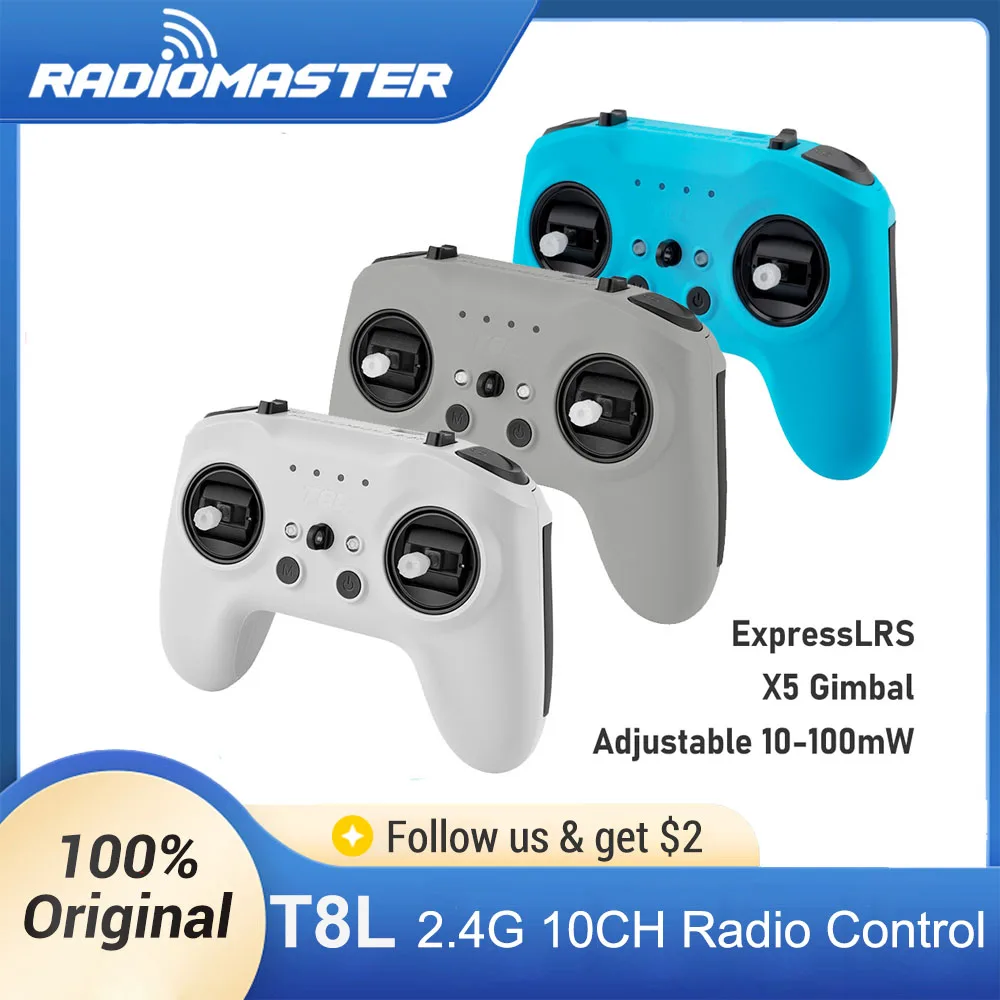
NEW RadioMaster T8L Radio FCC / LBT 2.4G ELRS 10CH Transmitter X5 Hall Gimbal…
External ELRS Micro TX Modules
If you already own an RC transmitter with a standard micro/JR-style module bay, an external transmitter module allows you to add ExpressLRS functionality to your current radio.
EMAX Aeris Link ExpressLRS Micro TX Module
The EMAX Aeris Link (priced around $39.07 USD, rated 99.5% across 1,428 reviews) is a dedicated micro TX module offered in both 2.4GHz and 915MHz frequency variants. It integrates an onboard OLED screen and an active cooling fan, allowing pilots to monitor transmission parameters, change output settings, and manage heat dissipation directly from the module hardware. It suits pilots who want visual real-time feedback and dual-band frequency options (2.4G or 915MHz) for their existing module-compatible transmitters.
HappyModel ES24TX Pro 1000mW 2.4G Micro TX Module
The HappyModel ES24TX Pro (priced around $43.54 USD, rated 98% across 1,151 reviews) focuses on raw 2.4GHz RF output capability, delivering up to 1000mW (1W) of transmission power. To manage higher power levels during extended flights, it includes an integrated cooling fan alongside an RGB status LED module. This unit is built for pilots prioritizing high output power and signal penetration for long-range FPV drones and RC airplanes.
Receivers: Completing the Control Link
A reliable radio link requires a receiver configured to match your aircraft or vehicle protocol requirements.
BeyondFPV 2.4G 7CH PWM / CRSF Receiver (2400RX)
The BeyondFPV ELRS 2.4G Receiver (priced at approximately $12.88 USD, rated 98% across 1,267 reviews) provides flexible connectivity options with both 7-channel PWM outputs and serial CRSF protocol support. While standard multirotors typically utilize serial CRSF communication to the flight controller, fixed-wing planes, RC cars, and boats often require direct PWM servo pins. Supporting both protocols makes this 2400RX receiver an adaptable solution across multi-rotor and traditional servo-driven models.

RADIOMASTER Pocket Radio Controller M2 FCC/LBT Hall Gimbal EdgeTX Transmitter…
Key Factors When Choosing ELRS Hardware
- Standalone Controller vs. Add-on Module: If you do not own a transmitter, a self-contained controller like the RadioMaster Pocket or T8L provides an all-in-one platform. If you already have a radio with a compatible module bay, adding an EMAX Aeris Link or HappyModel ES24TX Pro upgrades your existing gear efficiently.
- Transmission Power and Cooling: Lower power ranges (10–100mW on the T8L) are adequate for close-to-medium proximity flying, whereas high-power modules reaching up to 1000mW (such as the ES24TX Pro) require active fan cooling to maintain performance over long distances.
- Output Protocol on the Model: Ensure your receiver matches your build. Drones rely primarily on digital serial CRSF signals, while fixed-wing planes and surface models benefit from multi-channel PWM outputs like those found on the BeyondFPV 7CH receiver.
- Operating System and Configuration: Controllers running EdgeTX (like the RadioMaster Pocket) provide deep menu configurations and telemetry screens on the handset, whereas simpler transmitters focus on direct, hardware-centric operation.
Note: All prices referenced are global USD benchmark values and are subject to change over time.
Featured Products on AliExpress

Original EMAX Official Aeris Link ExpressLRS ELRS Micro TX Module 2.4G 915MHz…

HappyModel ES24TX Pro 1000mW 2.4G ExpressLRS ELRS Micro TX Module with Coolin…
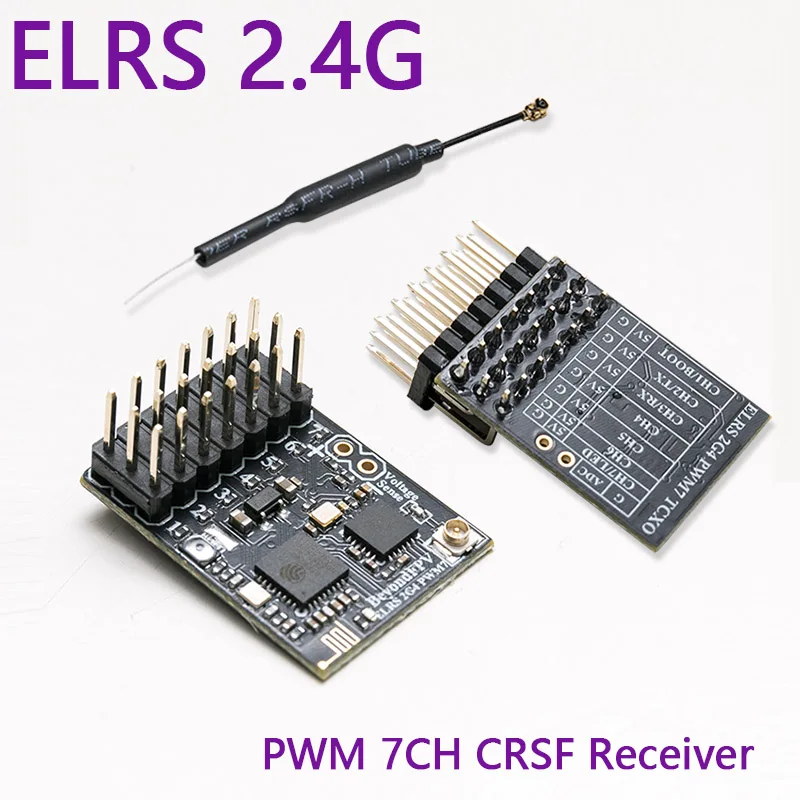
1/2PCS BeyondFPV ELRS 2.4G PWM 7CH CRSF Receiver ExpressLRS RX 2400RX PWM/CRS…
Related Articles
We frame recommendations around who each option suits, not universal winner claims.
Product Review
Budget Radio Controllers and RC Control Hardware Guide
Building or maintaining an RC aircraft, ground vehicle, or basic FPV platform requires a dependable control link. While high-end radio systems can easily exceed…
Product Review
Guide to FPV Radio Transmitters and ExpressLRS Receivers
The radio control link between your transmitter and your quadcopter is the single most critical bridge in FPV flight. Over recent years, open-source RC link sys…
Product Review
Guide to RC Radio Controllers, Receivers, and Essential Flight Gear
Selecting the right radio control system is a fundamental decision for any remote-control enthusiast, whether operating multirotors, surface models, or custom r…